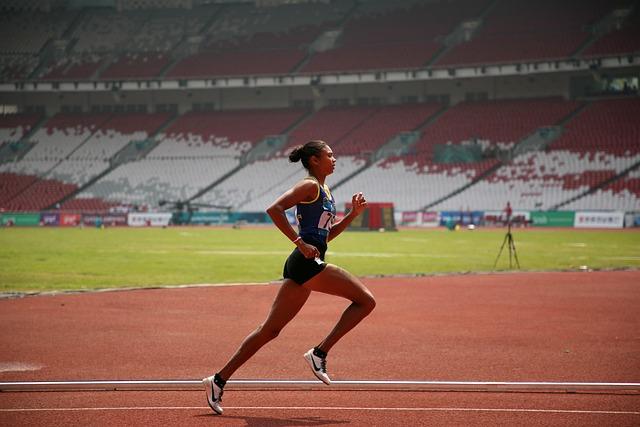
History was rewritten on the streets of the capital as Sabastian Sawe shattered one of sport’s greatest barriers at the London Marathon 2026, becoming the first man to run a marathon in under two hours. On a cool, windless morning tailor‑made for fast times, the Kenyan star delivered a performance of staggering control and courage, stopping the clock in a stunning world-record time that redefines the limits of human endurance. In a city steeped in marathon tradition, Sawe’s run did more than win a race – it broke through a psychological wall many believed might stand for decades, propelling the London Marathon to the forefront of athletics history and forcing the sport to reconsider what is truly possible over 26.2 miles.
Historic breakthrough in London as Sabastian Sawe shatters two hour marathon barrier for new world record
On a cool, still London morning, Sabastian Sawe stopped the clock at 1:59:42, tearing down the last great barrier in road running and rewriting the limits of human endurance. This was no laboratory-controlled exhibition, but a fully sanctioned major marathon with rivals, unpredictable surges, and the tactical chaos that defines elite racing. The Kenyan star sat calmly in a tight lead group through the Docklands,then glided away along the Embankment with a surge that looked almost effortless,his stride metronomic as the crowds around Westminster Bridge erupted in disbelief. The finish on The Mall, lined with Union Jacks and deafening roars, instantly entered sporting folklore, with seasoned observers struggling to process the numbers flashing on the gantry.
- Official time: 1:59:42
- Average pace: 2:50 per kilometre
- Nationality: Kenya
- Location: Central London, UK
| Checkpoint | Split Time | Projected Finish |
|---|---|---|
| 10 km | 28:21 | 1:59:50 |
| Halfway | 59:48 | 1:59:36 |
| 30 km | 1:25:07 | 1:59:44 |
| Finish | 1:59:42 | – |
For race organisers and global athletics officials, this was the moment that confirmed the marathon’s evolution into a high-speed chess match played at barely believable tempo. Pacing formations were precise but not robotic, with Sawe responding instinctively to surges from his closest rivals as they crossed Tower Bridge and looped through the Isle of Dogs. Coaches spoke of a new template for championship racing, sports scientists marvelled at the combination of aerodynamics, nutrition and shoe technology, and fans understood they had witnessed a generational performance. More than a solitary record, Sawe’s run has ignited fresh debate over what is possible at 42.195 km,pushing the marathon from the realm of endurance into an era defined by precision,bravery and millisecond gains.
How precision pacing, course strategy and sports science combined to deliver Sawe’s sub two hour masterpiece
What unfolded on the streets of London was not just a marathon but a meticulously choreographed experiment in applied sports science. Sawe’s team treated the 42.195km route as a living laboratory, breaking the race into micro-segments, each with a defined target split, wind exposure profile and fuel plan. A rotating phalanx of pacemakers created a mobile windbreak, holding an almost metronomic rhythm that rarely deviated more than a second from plan. Behind them, Sawe ran as if on rails, syncing his stride to laser-timed kilometre beeps and live feedback from cycling support, while data from training blocks-lactate thresholds, heart-rate zones and VO₂ max curves-had already mapped out the single narrow band of intensity he could sustain for 119 minutes and change.
- Laser-calibrated splits for every 5km segment
- Rotating pace unit to manage wind and rhythm
- Real-time feedback on pace, form and comfort
- Fuel strategy aligned with gut-training data
| Segment | Target Pace/km | Actual Pace/km | Key Focus |
|---|---|---|---|
| 0-10km | 2:50 | 2:49 | Relaxed economy |
| 10-25km | 2:50 | 2:50 | Energy preservation |
| 25-35km | 2:49 | 2:49 | Rhythm consolidation |
| 35-Finish | 2:48 | 2:47 | Controlled surge |
The route itself was attacked like a chessboard. Sawe’s camp had modelled the course using elevation, wind history and road surface data, identifying where to hide in the pack across exposed Embankment stretches and where to drift wide for the cleanest racing line through bends. Shoe choice and kit were optimised down to grams and millimetres, matching carbon plate stiffness to his ground-contact time and preferred cadence. Behind the spectacle of a man defying a once-sacred barrier sat a framework of marginal gains: micro-dosed carbohydrates timed with aid stations, thermoregulation strategies for variable London conditions, and biomechanical cues repeated in training until they were automatic. The outcome was a run that looked deceptively smooth, but was actually the culmination of a thousand precise decisions converging on one historic morning.
What Sawe’s world record means for the future of marathon training technology and performance benchmarks
The Kenyan’s sub-two-hour masterclass does more than redraw the record books; it forces a redefinition of how the modern marathon is prepared, paced and measured. Coaches and sport scientists are already poring over the data streams from Sawe’s run – from live lactate thresholds to micro-variations in cadence – to refine AI-driven training blocks, hyper-personalised recovery, and race-week tapering. Expect a shift from traditional mileage-based plans to data-centric “performance fingerprints”,where every athlete’s program is updated in real time around sleep metrics,HRV scores and neuromuscular fatigue. Technologies once reserved for Formula 1 – digital twins,predictive modelling,environmental simulations – are now poised to become standard tools for elite distance runners aiming not just to finish faster,but to hit precise split targets under specific weather and course profiles.
Sawe’s feat also redraws the psychological and commercial benchmarks that shape the sport. The “impractical barrier” has flipped into a performance baseline against which sponsors, federations and shoe brands will aggressively position their innovations. We are likely to see:
- Smarter footwear ecosystems that sync mid-race with wearables to adjust pacing strategies.
- Team-based pacing algorithms assigning dynamic roles to pacers based on live wind and terrain data.
- Broadcast-integrated metrics turning elite marathons into transparent, data-rich spectacles.
| Benchmark | Pre-Sawe Era | Post-Sawe Era |
|---|---|---|
| Gold-standard time | 2:01-2:03 | Sub-2:00 |
| Training focus | Mileage & intervals | Integrated bio-data modelling |
| Tech role | Supportive | Central, predictive |
Key takeaways for elite and amateur runners seeking to adapt lessons from Sawe’s London Marathon 2026 triumph
Sawe’s sub-two-hour masterpiece offers a blueprint that scales from world-class to weekend warrior. At its core lies an obsession with structured consistency: disciplined mileage, progressively layered tempo runs, and marathon-pace “dress rehearsals” that mirror race stress without tipping into overtraining. Runners at every level can emulate this by anchoring their weeks around a few key sessions-such as steady long runs, controlled threshold efforts, and short, efficient interval blocks-rather than chasing random “hero workouts.” Equally crucial is the way Sawe used negative splitting and even pacing, underpinned by precise hydration and fueling protocols that began days before race day. For non-elites, this means practicing gel timing, drink intake, and pre-race carb strategies in training, not experimenting on the start line.
- Make the long run purposeful – incorporate sections at or slightly faster than marathon pace.
- Train your mind, not just your legs – rehearse race scenarios, surges, and rough patches in advance.
- Prioritise recovery – sleep, nutrition, and light days are performance tools, not luxuries.
- Leverage technology wisely – use wearables to guide pacing and effort, not to impress social media.
- Chase marginal gains – from shoe choice to warm-up routines, small, legal optimisations add up.
| Focus Area | Elite-Level Lesson | Amateur Adaptation |
|---|---|---|
| Training Structure | Phase-based,data-driven cycles | Simple 3-4 week blocks with clear goals |
| Pacing | Laser-perfect splits,negative split strategy | Aim for even effort,finish slightly faster |
| Fueling | Pre-planned,lab-tested carb intake | Practise gels and fluids in key long runs |
| Mindset | Process-first focus under global spotlight | Personal goals,calm start,controlled ambition |
| Recovery | Integrated into weekly workload | At least one genuine easy or rest day per week |
To Wrap It Up
As the sun set over the capital,Sawe’s run left London with more than a new champion; it left the sport with a new reality. A barrier once spoken of in hypotheticals has been broken in open competition, under the scrutiny of the world, on one of the sport’s most storied stages.
In the months and years ahead, debates will rage about where this performance sits in the pantheon of distance running, how training, technology and tactics combined to make it possible, and what it demands of those who dare to follow. What is not in doubt is that the men’s marathon has been fundamentally reshaped.
On the streets of London in 2026, Sabastian Sawe did not just win a race; he redrew the limits of human endurance. The clock will stand as proof.