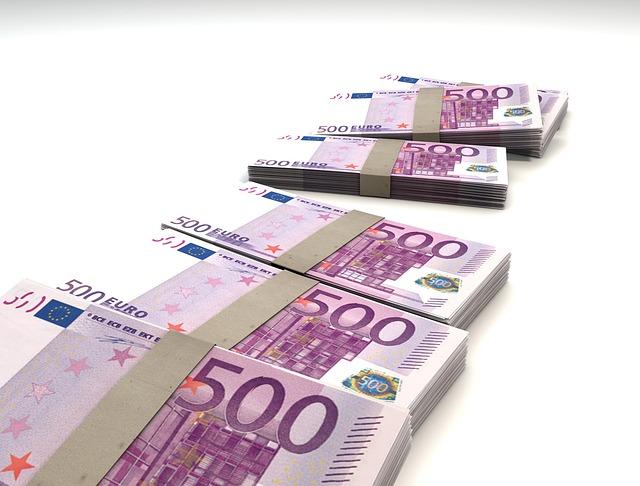
Eurozone economic growth slowed slightly in the first quarter of 2026, signaling a fragile recovery as policymakers juggle persistent inflation pressures, higher borrowing costs and lingering geopolitical uncertainty. Fresh data released on Tuesday showed the single-currency bloc losing momentum after a modest rebound late last year, raising questions about the durability of the region’s expansion. While recession fears have eased,the latest figures suggest that businesses and consumers across the euro area remain cautious,with uneven performance between core economies such as Germany and France and their southern counterparts.
Eurozone growth slowdown in early 2026 signals fragile post inflation recovery
The latest figures from Eurostat show that output across the single currency bloc is losing momentum just as headline inflation finally retreats towards the European Central Bank’s target. Quarterly GDP growth slipped to a marginal pace, exposing how higher borrowing costs, weak external demand and lingering wage pressures are restraining the rebound. While consumer prices are no longer spiralling, the damage from two years of elevated inflation is still visible in subdued household spending and cautiously optimistic corporate investment plans.
Economists warn that the region is entering a delicate phase in which any policy misstep could choke off the recovery before it gains traction.Business surveys report soft order books and diverging performance between core and peripheral economies, underlining the patchy nature of the upturn. Key fault lines include:
- Household demand: Real incomes are only slowly recovering, keeping retail activity muted.
- Industrial output: Manufacturing remains vulnerable to weak global trade and energy price volatility.
- Labor market: Employment is holding up, but hiring intentions are cooling in several large economies.
- Policy direction: Markets are betting on gradual ECB rate cuts,but the path remains data-dependent.
| Indicator | Q4 2025 | Q1 2026 |
|---|---|---|
| GDP growth (q/q) | 0.3% | 0.1% |
| Inflation (y/y) | 2.8% | 2.2% |
| Unemployment rate | 6.4% | 6.5% |
Sector by sector breakdown reveals manufacturing weakness and services resilience
Fresh data from Eurostat underscores the patchy nature of the eurozone’s recovery, with factory floors still quiet while high streets and digital platforms stay busy. Industrial production slipped again, dragged down by auto makers, chemicals and basic metals, as higher financing costs and weak global demand continued to bite. By contrast, business leaders across retail, logistics and digital services reported steady order books, helped by resilient household spending and the ongoing shift to online consumption. The divergence is becoming more pronounced,with some policymakers warning that an overreliance on services could leave the bloc exposed to sudden swings in consumer confidence.
Within this uneven landscape, national and sectoral stories are diverging sharply, as shown below:
- Germany is wrestling with a deeper industrial slump, even as professional services cushion the blow.
- France is leaning on tourism, hospitality and public services to offset flat factory output.
- Italy is seeing pockets of strength in niche manufacturing, but broad services remain the growth engine.
- Spain benefits from robust travel and leisure activity, with exports of manufactured goods still lagging.
| Sector | Q1 2026 Output | Trend vs Q4 2025 |
|---|---|---|
| Manufacturing | -0.4% | Softening |
| Construction | 0.1% | Flat |
| Consumer Services | 0.7% | Improving |
| Business & Professional Services | 0.5% | Stable |
Energy costs borrowing conditions and geopolitical risks weigh on business investment
Across the currency bloc, boardrooms are shelving expansion plans as a toxic mix of higher utility bills, tighter credit standards and diplomatic flashpoints narrows the margin for error. Manufacturers in energy‑intensive sectors report that electricity contracts locked in during the 2022-24 price surges are still squeezing cash flow, while banks-under pressure from regulators and rising default risks-are demanding more collateral and charging wider spreads. This is especially evident among mid‑sized firms in Italy, Spain and Portugal, many of which rely on short‑term bank lending and lack access to capital markets. Consequently, corporate leaders are focusing on balance‑sheet repair rather than capacity upgrades, with capital budgets skewed toward maintenance rather than new projects.
- Energy‑intensive industries delay plant modernisation and green upgrades.
- Smaller exporters face stricter lending criteria and longer approval times.
- Multinationals re‑route supply chains to hedge against sanctions and trade tensions.
- Service firms scale back office expansions amid uncertain client demand.
| Sector | Main Constraint | Investment Trend (Q1 2026) |
|---|---|---|
| Manufacturing | Volatile gas and power prices | Selective, focused on automation |
| Construction | Higher funding costs | Flat, with project postponements |
| Logistics | Trade route uncertainty | Shift toward regional hubs |
| Technology | Weaker venture funding | Moderate, led by large caps |
From the Black Sea to the Red Sea, flashpoints are feeding into board‑level risk models, prompting firms to hold more cash and shorten planning horizons. Exporters exposed to Eastern European and Middle Eastern markets are reassessing inventory strategies and transport routes, wary of sudden sanctions or shipping disruptions that could strand goods and erode margins. While some larger groups are using this period to snap up distressed competitors and invest in digital resilience, the broader corporate landscape remains cautious. The combination of elevated borrowing costs, fragile energy security and unpredictable geopolitics is slowing the pace at which businesses commit to long‑term, productivity‑enhancing projects-adding a further drag to the region’s already modest growth profile.
Strategic recommendations for policymakers investors and UK firms exposed to eurozone demand
With eurozone momentum softening, Westminster and Whitehall face a narrow window to reinforce the UK’s resilience. Policymakers should prioritise targeted fiscal support for sectors most reliant on continental demand, while accelerating trade diversification beyond the bloc. This includes fast‑tracking regulatory equivalence deals where feasible,expanding export finance guarantees and using public procurement to nurture domestically anchored supply chains.Simultaneously occurring,the Bank of England will need to balance inflation risks against the drag from weaker external demand,signalling clearly to avoid unsettling gilt markets and sterling.
- Policymakers: front‑load infrastructure and green investment, deepen UK financial market competitiveness, and strengthen support for SME exporters.
- Investors: tilt portfolios towards UK firms with diversified revenue streams, robust pricing power and low euro‑exposure on costs.
- Corporates: hedge currency and interest‑rate risk more actively, renegotiate euro‑denominated contracts, and explore new growth corridors in North America and Asia‑Pacific.
| Segment | Key Risk | Suggested Move |
|---|---|---|
| Manufacturers | Order slowdowns | Shift to high‑value niches, near‑shore components |
| Services & Tech | Delayed contracts | Flexible pricing, expand non‑EU client base |
| Financials | Lower deal flow | Develop advisory for corporate restructuring and M&A |
For UK firms exposed to eurozone demand, the priority is to convert vulnerability into optionality. Companies should stress‑test revenue under more pronounced continental weakness, build contingency plans for working‑capital strains and use the current slowdown to renegotiate logistics and financing terms. Proactive interaction with lenders and investors will be critical,as will investing in data‑driven market intelligence to track demand shifts at a granular level. Those that move early to streamline operations, deepen customer relationships and re‑route growth strategies stand the best chance of turning a softer eurozone into a catalyst for long‑term strategic repositioning.
Closing Remarks
As the eurozone navigates this softer start to 2026, the balance between containing inflation and sustaining momentum will define the policy and market narrative in the months ahead. For businesses, investors and households across the bloc, the latest figures serve less as a turning point than a reminder: the recovery remains intact, but it is indeed fragile, uneven and highly sensitive to both political and economic shocks. How decisively governments and the ECB respond to that reality will determine whether this slowdown proves a brief pause-or the first sign of a more protracted loss of pace.