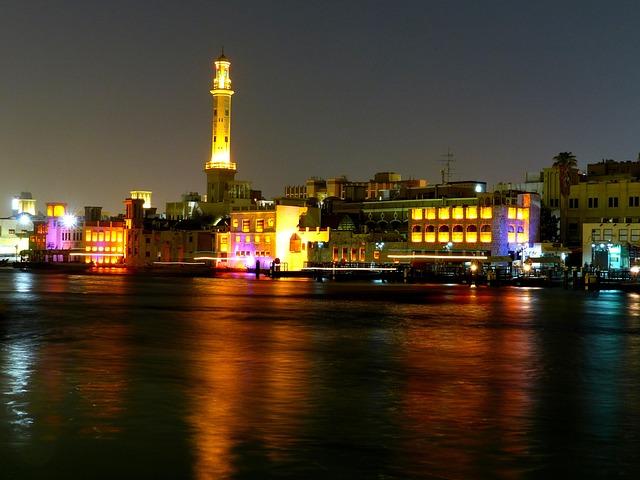
Dubai has once again been thrust into the center of escalating Middle East tensions, as Iran launched a fresh wave of missile strikes targeting the emirate and its surroundings. The latest attack, confirmed by regional security sources and closely monitored by international markets, has reignited fears over the stability of one of the world’s most critical hubs for trade, aviation, and finance. For London’s business community-deeply intertwined with Gulf investment, energy flows, and global logistics-the incident raises urgent questions about geopolitical risk, supply chain resilience, and the security of capital in a region long viewed as a haven for growth amid volatility.
As details emerge on the scale of the strike, the effectiveness of local defense systems, and the immediate impact on infrastructure and commerce, investors and policymakers in the UK are reassessing their exposure. This article examines what is known so far about the attack, the motivations driving Iran’s latest move, and the potential consequences for London’s financial markets, corporate operations, and broader economic interests across the Gulf.
Escalation in the Gulf region Dubai reeling as Iranian missile strikes threaten key trade and finance hub
Once considered one of the world’s safest investment havens,the emirate now finds its glittering skyline forced into the uncomfortable role of frontline infrastructure. Air-raid sirens, disrupted flight paths and temporary port closures have injected a new risk premium into a city built on seamless connectivity. Traders across the Dubai International Financial Center (DIFC) and logistics operators in Jebel Ali are reassessing exposure as insurers revise clauses and premiums for assets along the Gulf corridor. This new reality is reshaping boardroom discussions in London, where exposure to Gulf bonds, regional sovereign wealth funds and shipping lanes is suddenly being recalibrated.
The immediate shock has rippled through core sectors that underpin the city’s position as a gateway between East and West:
- Aviation: Rerouted and delayed flights, with carriers weighing long-term route diversification.
- Shipping & logistics: Heightened security around key terminals and higher war-risk surcharges.
- Financial services: Volatility in regional equities, FX pressure and a surge in demand for safe-haven assets.
- Tourism & retail: Short-term cancellations and weakened consumer sentiment in luxury segments.
| Market Indicator | Early Reaction |
|---|---|
| Regional equities | Sharp intraday sell-off, partial late recovery |
| Oil prices | Spike on supply fears, then stabilisation talks |
| Insurance premiums | Immediate upward revisions for Gulf assets |
| Safe-haven flows | Increased demand for gold and US Treasuries |
Impact on global markets Energy prices currency volatility and the ripple effect on London and European investors
The immediate market reaction has been a sharp repricing of risk across energy, FX and equity indices, as traders weigh the prospect of a prolonged confrontation in the Gulf. Brent crude futures spiked on fears of supply disruptions through the Strait of Hormuz, with European utilities, airlines and heavy industry among the first in line for margin pressure. In London, portfolio managers are rotating out of cyclical transport and into defensive energy stocks, while reassessing exposure to Dubai-listed financials and real estate vehicles. The City’s trading floors report thinner liquidity and wider spreads in Middle East-linked assets, as algorithms amplify intraday swings and risk managers tighten limits on leveraged positions.
- Higher hedging costs for fuel-dependent sectors and FX exposures
- Safe-haven flows into the US dollar, Swiss franc and gold
- Pressure on emerging market debt linked to Gulf sovereigns
- Repricing of European inflation expectations via the energy channel
| Asset | Direction | Investor Takeaway |
|---|---|---|
| Brent crude | ↑ Volatile gains | Energy equities cushioned, input costs surge |
| GBP/EUR | ↑ Modest firming | Seen as relative safe haven in European complex |
| Dubai-linked bonds | ↓ Price, ↑ yield | Risk premium widens, selective buyers only |
For European and London-based investors, the shock is less about headline price spikes and more about the persistence of currency volatility and geopolitical risk premia. A stronger dollar on safe-haven flows complicates returns for sterling and euro portfolios already grappling with higher funding costs, while option markets are pricing in fatter tails for Gulf-related currencies. This is feeding through to asset allocation committees that are now:
- Revisiting oil price assumptions in 2024-2025 earnings models
- Adding FX overlays to protect overseas cash flows
- Trimming exposure to highly leveraged Dubai property and infrastructure plays
- Boosting allocations to liquid, real-asset hedges such as infrastructure and commodities
Security and diplomatic fallout How regional alliances shipping routes and aviation corridors are being reshaped
The latest strike on Dubai has jolted a fragile regional order, accelerating a quiet redrawing of who stands with whom-and where-and under what conditions.Gulf monarchies are recalibrating their security guarantees, pressing Western partners for clearer red lines while quietly exploring back channels with Tehran to avoid miscalculation. In the background, Moscow and Beijing see an opening to deepen their footprint in Gulf security architecture, offering weapons, surveillance technology and alternative financial channels. This is translating into a new layer of “security hedging,” where states diversify their patrons rather than betting on a single guarantor. That shift is visible in a flurry of memoranda of understanding, joint naval drills and intelligence-sharing pacts that reposition the UAE, Saudi Arabia and Qatar as both clients and brokers in overlapping spheres of influence.
At the operational level, the fallout is being felt most sharply along the sea lanes and skies that have underpinned Dubai’s ascent as a logistics and aviation hub. Rerouted tankers and container ships are testing the resilience of the Strait of Hormuz and Red Sea corridors, adding miles, costs and insurance premiums to every voyage. Major carriers are revising flight paths to skirt perceived missile envelopes, carving new aerial corridors over safer but longer routes. The result is a patchwork of ad‑hoc adjustments that could soon harden into a new normal:
- Airlines shifting night-time schedules to daylight windows for enhanced surveillance.
- Shipping lines clustering into escorted convoys through high‑risk chokepoints.
- Insurers imposing war-risk surcharges on specific Gulf and Gulf-adjacent routes.
- Port authorities investing in hardened infrastructure and rapid‑response protocols.
| Route | Pre‑attack status | Post‑attack shift |
|---|---|---|
| Dubai-London flights | Shortest Gulf corridor | Longer northern detours |
| Strait of Hormuz | High volume,routine risk | Escorted traffic,higher premiums |
| Jebel Ali shipping hub | Regional trans-shipment core | Diversification to rival ports |
What businesses and investors should do Risk mitigation strategies contingency planning and sector specific exposure in Dubai and beyond
For corporates and funds with exposure to the emirate,the latest escalation is a reminder that risk management in the Gulf can no longer be treated as a box‑ticking exercise. Boards are reassessing their playbooks, stress‑testing assumptions and activating contingency plans that cover everything from staff safety to treasury operations. Core actions now include: diversifying banking relationships across multiple jurisdictions, mapping supply‑chain pinch points, and pre‑negotiating alternative logistics routes through Oman, Saudi Arabia or European hubs. Businesses are also revisiting insurance cover for political violence, increasing buffer inventory of critical components, and strengthening cloud‑based back‑ups so that trading and settlement can continue even if local infrastructure is disrupted.
- Reallocate capital across Gulf and European hubs to reduce single‑city concentration.
- Scenario plan for airspace closures, sanctions shifts and energy price spikes.
- Ring‑fence critical teams with remote‑work protocols and dual‑location staffing.
- Enhance intelligence via specialised geopolitical and maritime‑security briefings.
- Renegotiate covenants with lenders to reflect heightened regional volatility.
| Sector | Main Exposure in Dubai | Mitigation Focus |
|---|---|---|
| Real Estate & Hospitality | Tourism slowdown,occupancy shocks | Dynamic pricing,regional guest mix |
| Aviation & Logistics | Airspace risk,port disruptions | Alternate routes,multi‑hub strategy |
| Energy & Commodities | Price volatility,shipping lanes | Hedging,diversified offtake points |
| Financial Services | Market sentiment,liquidity swings | Stress tests,cross‑border booking |
| Tech & Data | Data‑centre clustering | Multi‑cloud,split hosting |
Institutional investors are applying a similar lens,revising country‑ and city‑level risk premia and interrogating how much of their MENA allocation is ultimately dependent on Dubai’s infrastructure and connectivity. Rather than exiting the market, many are opting for a “barbell” strategy: preserving core exposure to the city’s resilient trade and finance ecosystem while building offsetting positions in other Gulf centres and safe‑haven assets. Limited partners are pushing managers for clearer disclosure of geopolitical assumptions in models,explicit downside cases for transit‑and‑tourism heavy assets,and robust triggers for when to pause new deployments. The message from the latest missile strike is blunt: performance in the region will now depend not only on growth metrics, but on how well risk is priced, monitored and actively managed across portfolios.
Future Outlook
As the region absorbs the shockwaves of yet another escalation, the missile strikes on Dubai underscore how quickly the Gulf’s veneer of stability can be shattered by wider geopolitical rivalries. For global markets and business leaders in London and beyond, the latest attack is more than a distant headline: it is a reminder that energy routes, trade corridors and investment flows remain acutely vulnerable to events far beyond the City’s control.
In the days ahead, attention will turn to how the UAE responds diplomatically, whether Iran faces further isolation, and how international actors seek to contain a crisis with clear economic, as well as security, implications. For now, investors, policymakers and businesses will be watching closely, as each new progress helps determine whether this is a short-lived flare-up or the prelude to a more prolonged period of instability in one of the world’s most critical commercial hubs.