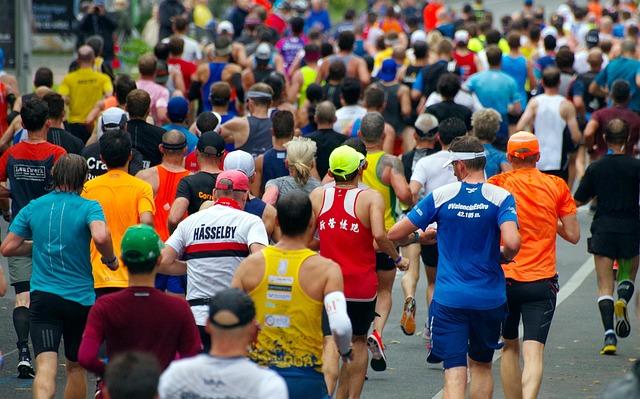
History was rewritten on the streets of the capital today as Kenya’s Sabastian Sawe became the first athlete to run a competitive marathon in under two hours,winning the 2026 London Marathon in a performance that will redefine the limits of human endurance. In cool, overcast conditions ideal for fast times, Sawe surged away from an elite field to stop the clock in a scarcely believable time, shattering the previous world record and transforming a once-theoretical barrier into reality. His landmark run headlined a dramatic day of racing that saw records tumble, reputations forged and London cement its status as the stage for one of the most notable moments in distance-running history.
Historic breakthrough in distance running as Sabastian Sawe shatters the two hour marathon barrier
In a moment that redefines the limits of human endurance, Kenya’s Sabastian Sawe crossed the finish line on The Mall with the clock stopped at an astonishing 1:59:28, becoming the first athlete to run a competitive, record-eligible marathon in under two hours.Unlike controlled exhibition attempts, this feat unfolded amid the unpredictable dynamics of a major city race-tactical surges, variable weather, and a deep elite field all vying for the same prize. Sawe’s performance combined surgical pacing with fearless aggression; he stayed sheltered in a tight lead pack through halfway before unleashing a decisive move over the final 10km that broke both his rivals and the clock. Spectators lining the route,from Greenwich to Westminster,sensed history in real time as split times flashed on big screens and the projected finish hovered tantalizingly below the two-hour mark.
Coaches and analysts were fast to highlight the convergence of factors behind this landmark run, from advances in shoe technology and course optimization to meticulous nutrition strategies and data-driven training blocks at altitude. Yet Sawe’s achievement will be remembered not just as a triumph of sports science, but as a moment of pure competitive theater. Among the key talking points were:
- Relentless even pace through the first 30km, with only marginal fluctuations in lap splits.
- Decisive negative split after Tower Bridge, turning a world-class pace into record-shattering speed.
- Resilience under pressure, responding to mid-race surges without overcommitting.
- Historic implications for future championship races and course records worldwide.
| Segment | Time | Avg. Pace |
|---|---|---|
| 0-21.1 km | 59:46 | 2:50/km |
| 21.1-35 km | 39:43 | 2:50/km |
| 35-42.195 km | 20: – | 2:48/km |
| Total | 1:59:28 | 2:50/km |
How London course conditions pacing strategy and technology combined to enable a sub two hour performance
On a cool, wind-tamed April morning, London became more than a backdrop; it turned into a co-author of Sabastian Sawe’s historic run. The familiar course, with its gentle net decline and long, straight stretches along the Thames, was reimagined as a precision-engineered runway. Race organizers adjusted start times to sync with optimal temperature bands and minimal crosswinds, while Sawe’s team built a pacing blueprint around each segment’s quirks: the narrow twists of Greenwich, the exposed riverfront miles, and the psychologically brutal final drag along The Mall. A rotating phalanx of pacemakers, drilled to the second, formed a moving windbreak, keeping Sawe cocooned at a near-mythic rhythm where every split hovered on the edge of possibility rather than panic.
This choreography of environment and strategy was amplified by technology woven into almost every stride. Sawe’s super-shoes, tuned with updated midsole compounds and reshaped carbon plates, were matched to his unique gait profile, while micro-GPS and inertial sensors streamed data in real time to a behind-the-scenes analytics team. They monitored micro-variations in pace and cadence and relayed simplified cues to his in-race support: slow by a whisper on shaded descents, squeeze a second on exposed flats, adjust fluid intake as humidity shifted. Even nutrition was algorithm-driven,with on-course feeding planned around predicted glycogen dips rather than rough rule-of-thumb timing. The performance was less a lone surge against a stopwatch and more a high-speed negotiation between athlete, city and circuitry, where each element below worked in concert to shave away the final, stubborn seconds separating history from expectation.
- Course-specific pacing charts mapped to every kilometer marker.
- Data-informed pacemaker rotations designed to minimize wind exposure.
- Biomechanics-tuned footwear matched to Sawe’s stride efficiency.
- Live performance dashboards tracking pace, heart rate and form drift.
| Segment | Average Pace | Key Aid |
|---|---|---|
| Start-10K | 2:49/km | Wind-shielding pacers |
| 10K-30K | 2:50/km | Real-time pacing data |
| 30K-Finish | 2:48/km | Targeted carb boosts |
What Sawe’s record means for elite marathoning Olympic strategy and the future of road racing
Sawe’s 1:59:47 detonates the playbook for championship racing, especially with the LA 2028 Olympic marathon on the horizon. National teams will now have to decide whether to prioritize pure speed merchants capable of sub-two-hour pacing or conventional grinders built for tactical surges in heat and hills. Expect more federations to invest in altitude-specific training camps, coordinated shoe and super-foam advancement, and data-driven race simulations that model how to respond when one athlete tries to turn the Olympic marathon into a controlled time trial from the gun. Coaches are already sketching out new scenarios for when an athlete like Sawe launches a decisive move at 25 km instead of the classic 35 km strike.
On the commercial and cultural front,this run may mark a reset in how road races are staged,monetized,and watched. Events will chase faster courses and deeper fields to stay relevant, and broadcasters will package marathons less like slow-burn epics and more like live-performance science experiments, tracking in real time how athletes flirt with physiological limits. We’re likely to see:
- Dynamic pacemaker rotations designed around even 14:05-14:10 5 km splits.
- Appearance-fee arms races to secure the next sub-two contender.
- Tiered bonus structures that reward course records, negative splits, and aggressive mid-race moves.
| Factor | Pre-Sawe Era | Post-Sawe Era |
|---|---|---|
| Winning Time Target | 2:02-2:04 | Sub-2:01 essential |
| Team Selection | Medal potential | Medal + record threat |
| Race Tactics | Surge at 35 km | Controlled burn from halfway |
| Sponsorship Focus | Podiums & exposure | Records, technology & innovation |
Training lessons from Sawe’s build up actionable insights for competitive and recreational runners
Behind Sawe’s headline-grabbing split times lies a blueprint any runner can adapt. His camp reports a disciplined blend of polarised training-very easy runs and very hard sessions-with little mileage wasted in the “grey zone.” Long runs were kept mostly conversational, while quality days focused on race-pace intervals and controlled threshold work, all anchored by meticulous recovery: sleep, soft-tissue therapy and carefully periodised down weeks.He also leaned heavily on course-specific preparation, rehearsing London’s turns and cambers in training, and using simulation runs at slightly slower than race pace to dial in feeding, pacing and mental cues. Recreational runners can imitate this by planning key long runs on similar terrain, sticking to realistic pace bands and treating recovery days as non‑negotiable training sessions in their own right.
Equally instructive is his approach to detail. Sawe’s team tracked everything from heart rate variability to shoe rotation, using the data to tweak workload before fatigue became injury. Amateur athletes can mirror this mindset with simple tools and routines:
- Anchor each week around one long run, one faster session and plenty of truly easy mileage.
- Practise fueling during long efforts, not just on race day, to train the gut as well as the legs.
- Respect micro-goals: focus on the next kilometre, not the finish line, to manage late-race distress.
- Measure, don’t obsess: track basic metrics, then adjust gradually instead of chasing instant gains.
| Sawe’s Habit | Runner’s Takeaway |
|---|---|
| Polarised mileage | Run easy on easy days, hard on hard days |
| Course simulations | Train on terrain that mimics race conditions |
| Fuel rehearsals | Test gels and drinks in training, not on race day |
| Data-guided tweaks | Adjust volume when fatigue builds, before injury |
Wrapping Up
As the crowds disperse from The Mall and the barriers are lifted from London’s streets, the impact of Sebastian Sawe’s run is only beginning to settle in. The Kenyan’s sub-two-hour triumph has redrawn the boundaries of endurance sport, transforming a once-theoretical milestone into competitive reality and forcing athletes, coaches and governing bodies to rethink what is possible over 26.2 miles.
For London,a race already steeped in iconic moments,2026 will stand apart: the year its fast,familiar course became the stage for a performance that will shape marathon running for a generation. The debates over pacing, technology and fairness will continue, but so too will the inspiration taken by club runners and aspiring elites who watched history unfold on the capital’s streets.
Sawe leaves London not only with a winner’s medal and a world record, but with a legacy secured. Future champions will chase his time, organisers will chase his spectacle, and the London Marathon’s reputation as the sport’s defining theatre has never looked stronger.