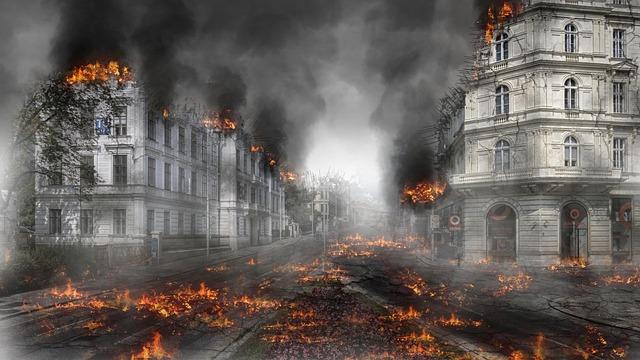
Moscow and Minsk have launched joint nuclear war games near NATO’s eastern flank, sharply escalating tensions along one of Europe’s most volatile frontiers. The exercises, announced with minimal detail by Russian and Belarusian authorities, are billed as a test of “non-strategic” nuclear readiness and coordination-yet they unfold against the backdrop of the war in Ukraine, a deepening confrontation with the West, and growing concern over nuclear brinkmanship. As London and other European capitals weigh the implications, the drills raise urgent questions about deterrence, miscalculation, and the future security architecture on the continent’s edge.
Escalating nuclear drills by Moscow and Minsk raise fresh security alarms along NATO’s eastern flank
With Russia and Belarus rehearsing battlefield nuclear deployments just a short flight from Warsaw and Vilnius, defense planners across Eastern Europe are recalibrating crisis scenarios once considered remote. The latest manoeuvres simulate the transfer, assembly and potential launch of tactical warheads, signalling a readiness to integrate nuclear options into conventional operations. This shift has sharpened nerves in capitals already grappling with a prolonged war in Ukraine and a steady build-up of Russian forces in Kaliningrad. NATO officials warn that such drills blur the line between deterrence and intimidation, transforming border regions into a high-stakes proving ground for strategic messaging.
Behind the choreography of convoys, missile units and command bunkers lies a complex web of risks that extend far beyond the immediate theater. Regional governments fear miscalculation or technical malfunction could trigger unintended escalation, while energy corridors, trade routes and civilian aviation lanes remain uncomfortably close to potential flashpoints. In response, allied states are quietly upgrading early-warning systems, rotating additional troops to front-line bases and intensifying joint exercises aimed at countering hybrid and nuclear threats.
- Heightened alert levels for air defence and missile tracking systems
- Increased intelligence sharing among NATO and partner states
- Accelerated modernisation of conventional deterrence forces
- Expanded civil defence planning in exposed border regions
| Key Border State | Primary Concern | Immediate Response |
|---|---|---|
| Poland | Tactical missile deployments | Reinforced eastern bases |
| Lithuania | Pressure near Suwałki Gap | Joint drills with allies |
| Latvia | Airspace incursions | Upgraded radar coverage |
| Estonia | Hybrid and cyber activity | Expanded cyber-defence units |
Strategic implications for European defence posture as allied states reassess deterrence and readiness
For European planners, the drills are a stress test of long‑held assumptions about the stability of the nuclear threshold and the credibility of conventional deterrence along NATO’s eastern flank. Governments from Tallinn to Lisbon are now re‑evaluating not only force posture, but also the political will to sustain higher defence spending in the face of sluggish growth and domestic fatigue. In practice,this means more emphasis on forward‑deployed assets,hardened infrastructure and rapid‑reaction formations that can operate under the shadow of nuclear coercion,rather than in the relatively benign security environment of the post‑Cold War era. The message from Moscow and Minsk is being read in European capitals as a prompt to close long‑identified capability gaps rather than merely restating solidarity in communiqués.
Strategic debates are rapidly shifting from abstract white papers to concrete procurement and basing decisions, with a premium on interoperability, logistics resilience and civil-military preparedness. Defence ministries are quietly re‑examining rules of engagement, the survivability of command‑and‑control networks, and how to communicate deterrence to domestic audiences without stoking panic. This is driving a new policy agenda across allied states, visible in priorities such as:
- Deepening nuclear consultation within NATO forums to clarify roles, thresholds and signalling.
- Scaling up stockpiles of precision munitions, air defence systems and medical supplies for prolonged crises.
- Hardening critical infrastructure, from energy grids to fibre‑optic cables, against hybrid and kinetic threats.
- Expanding joint exercises that simulate escalation dynamics, cyber disruption and contested logistics.
| Priority Area | Policy Shift in Europe |
|---|---|
| Nuclear signalling | More public emphasis on allied extended deterrence guarantees |
| Force posture | Transition from tripwire deployments to more robust forward presence |
| Readiness | Shorter mobilisation timelines and stricter training standards |
| Industry | Multi‑year procurement to expand defence production capacity |
Economic and energy market fallout from heightened tensions on the NATO frontier
Financial desks from London to Frankfurt are now treating every headline out of Eastern Europe as a live trading signal. Benchmark gas prices on European hubs have already shown knee‑jerk volatility, with traders pricing in the risk of disrupted flows via Belarus and retaliatory sanctions that could squeeze Russian energy exports further. Equity markets are punishing energy‑intensive sectors-chemicals, heavy manufacturing, and aviation-on fears of another cost surge, while defence contractors and choice energy firms quietly rally. For policymakers, the spectre of renewed energy insecurity collides with sticky inflation, complicating interest‑rate paths and fiscal planning just as governments hoped to refocus on growth.
In the background, boardrooms are sketching new risk maps. Multinationals with exposure to Eastern Europe are reassessing supply chains, cross‑border financing and currency hedging strategies, anticipating that even a “contained” standoff could fracture logistics and capital flows. At the same time, the crisis is accelerating a structural pivot away from Russian hydrocarbons, encouraging EU capitals to double down on LNG contracts, storage capacity and renewables build‑out. Key pressure points now being monitored include:
- Pipeline vulnerability through Belarus and the Baltic corridor
- Sanctions spillover into banking, shipping and insurance markets
- Price shocks restarting the cycle of energy subsidies and windfall taxes
- Investment shifts favouring nuclear, offshore wind and energy storage
| Market Focus | Short-Term Impact | Strategic Response |
|---|---|---|
| European gas | Price spikes, liquidity squeeze | Boost storage, diversify suppliers |
| Power generation | Higher wholesale prices | Lock in long-term PPAs |
| FX & bonds | Safe-haven flows to USD, CHF | Adjust hedges, extend duration |
| Corporate investment | Delayed capex in border states | Relocate projects, de-risk supply |
Policy recommendations for the UK and EU to strengthen deterrence, crisis communication and arms control
Western capitals need to move beyond ritual condemnations and quietly recalibrate the balance of risk and reassurance on NATO’s eastern flank. That means investing in a more credible mix of conventional and nuclear deterrence,while avoiding theatrics that mirror Moscow’s own nuclear signalling.The UK and EU should push for tighter integration of national defence plans with NATO’s nuclear posture; accelerate deployment of air and missile defences in Poland, the Baltics and the Black Sea region; and deepen joint exercises that stress command resilience under cyber and electronic attack. At the same time, London is well placed to lead an EU-UK dialogue on economic resilience-from energy to dual‑use technologies-to ensure that sanctions and export controls sharpen deterrence without triggering unintended escalation.
Yet hard power alone cannot manage a crisis sparked by simulated nuclear strikes on NATO’s doorstep. European capitals should establish a layered system of crisis communication and arms control diplomacy that combines discreet military hotlines,public transparency measures and renewed talks on non‑strategic nuclear weapons. Concrete steps could include:
- Reactivating military‑to‑military hotlines with Russian counterparts, insulated from political disputes.
- Creating an EU-UK “Nuclear Risk Taskforce” to track exercises, share intelligence and brief allies in real time.
- Proposing verifiable limits on the deployment and movement of short‑range nuclear systems in Europe.
- Expanding OSCE and NATO transparency tools, including advance notification of large‑scale drills.
| Priority Area | Lead Actor | Timeframe |
|---|---|---|
| Missile defence upgrades | UK & Eastern EU members | 2024-2026 |
| Crisis hotlines revival | EU Political & Security Committee | Within 6 months |
| Nuclear risk taskforce | UK-EU Joint Council | Within 1 year |
To Conclude
As Moscow and Minsk press ahead with their nuclear war games on NATO’s doorstep, the exercises underscore a hardening security landscape in Eastern Europe. For Western capitals,they are both a signal and a test: a reminder of Russia’s strategic capabilities,and a measure of how the alliance responds to heightened nuclear rhetoric without escalating further.
In the months ahead, attention will focus on whether this show of force remains a contained demonstration or becomes part of a more sustained pattern of brinkmanship. For now,policymakers in London,Brussels and Washington are left to balance deterrence with diplomacy,mindful that miscalculation in this tense borderland could carry consequences far beyond the region.