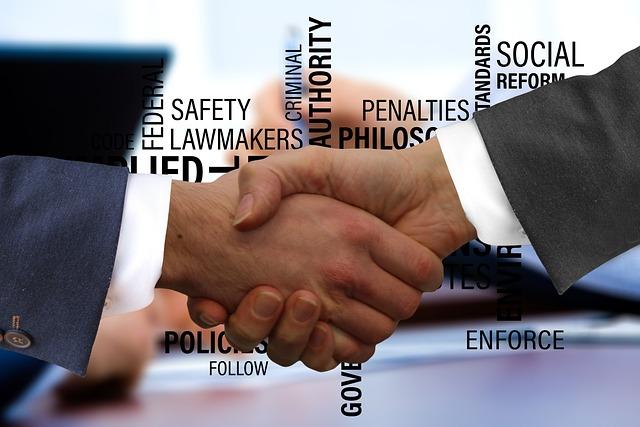
The Embassy of the Republic of Iraq in London has hosted a high‑level joint workshop with the UK’s National Crime Agency (NCA) and the Home Office, underscoring a growing commitment to deepen bilateral security cooperation. Bringing together diplomats, law‑enforcement officials and security specialists, the event focused on enhancing joint efforts to combat organised crime, disrupt criminal networks operating across borders, and improve data‑sharing between Iraqi and British authorities. Against a backdrop of evolving transnational threats-from human trafficking and money laundering to narcotics and illicit finance-the workshop reflects a shared determination by Baghdad and London to strengthen operational partnerships, modernise investigative tools and reinforce the rule of law.
Deepening bilateral security ties through collaborative training and intelligence sharing
Participants from Iraqi law enforcement bodies and UK agencies used the workshop to design a new cycle of joint training programmes focused on complex investigations, financial tracking of criminal networks, and digital evidence handling. Through scenario-based exercises and case‑study reviews, officers exchanged operational methodologies and refined common protocols for cross‑border arrests and asset recovery. The Embassy emphasised that these initiatives aim not only to transfer knowledge, but to embed a culture of continuous professional growth that reflects international best practice while remaining sensitive to Iraq’s legal and institutional frameworks.
- Specialist investigative training for counter‑organized crime units
- Joint simulations on border management and human trafficking cases
- Technical workshops on digital forensics and encrypted communications
- Mentoring schemes pairing Iraqi officers with UK counterparts
| Focus Area | Lead Partner | Key Outcome |
|---|---|---|
| Financial crime | NCA | Shared asset‑tracing tools |
| Border security | UK Home Office | Unified risk profiles |
| Cyber investigations | Joint Task Team | Real‑time intel channels |
Alongside training, the workshop advanced a framework for more structured, lawful and rapid intelligence exchange between Iraqi and British services, with safeguards to protect sensitive data and individual rights. Delegates outlined practical mechanisms such as secure liaison officers, common analytical templates and coordinated threat assessments to disrupt transnational crime networks at an earlier stage. These arrangements are expected to improve the speed and reliability of responses to emerging threats, helping both countries to tackle money laundering, narcotics trafficking, human smuggling and terrorism financing with greater precision and mutual accountability.
Targeting organised crime networks with coordinated investigations and legal frameworks
The workshop underscored that confronting transnational criminal enterprises requires synchronized strategies rather than isolated actions. Iraqi diplomats, UK law-enforcement officials and legal advisers examined how joint investigative teams, secure intelligence channels and shared digital forensics can dismantle the leadership, finances and logistics of crime groups operating between the Middle East and Europe. Participants highlighted specific priorities, including:
- Real-time exchange of operational intelligence on trafficking routes, cyber-enabled fraud and money laundering.
- Joint targeting of high‑value suspects, enablers and facilitators who exploit jurisdictional gaps.
- Coordinated financial disruption using asset freezes, confiscation orders and oversight of high‑risk sectors.
- Enhanced mutual legal assistance to accelerate evidence gathering, extradition and prosecution.
Alongside operational measures, the discussions focused on aligning legal tools so that criminal networks cannot exploit differences between Iraqi and UK legal systems. Experts reviewed ways to modernise legislation, improve evidentiary standards in cross‑border cases and ensure that cyber and financial crimes are prosecuted with the same rigour as traditional offences. A joint reference matrix was proposed to clarify how each side can act swiftly within its own law while supporting the other’s investigations:
| Focus Area | Iraq – Key Measure | UK – Key Measure |
|---|---|---|
| Financial crime | Strengthen AML statutes and asset recovery tools | Deploy NCA financial intelligence and restraint orders |
| Human trafficking | Harmonise penalties and victim protection rules | Use modern slavery legislation in cross‑border cases |
| Cybercrime | Update digital evidence and data retention laws | Leverage specialised cyber units and rapid data requests |
Enhancing border security and migration controls to prevent trafficking and illicit flows
Participants from Iraqi and British agencies examined how to align visa, asylum, and customs procedures with modern risk‑based approaches, ensuring that legitimate travellers and trade move swiftly while high‑risk movements are intercepted. Experts from the National Crime Agency and the UK Home Office shared operational models for joint screening units, biometric verification, and advanced passenger information systems, highlighting how these tools can expose trafficking networks that exploit gaps in documentation and transit routes. In closed-door sessions, Iraqi representatives outlined current pressure points at land borders and airports, paving the way for a shared roadmap that prioritises technology transfer, specialist training, and real-time access to critical data.
The workshop also focused on disrupting illicit financial and logistical chains that sustain organised crime. Delegates agreed to pilot coordinated patrols and targeted investigations, supported by shared intelligence cells and specialised liaison officers. Key strands of cooperation include:
- Integrated watchlists combining Iraqi and UK alerts on smugglers, facilitators, and high‑risk intermediaries.
- Joint analytical teams to map trafficking corridors and identify emerging routes and modi operandi.
- Specialist training modules for frontline officers on victim identification, document fraud, and concealment methods.
- Secure dialog channels to accelerate cross‑border investigations and evidence sharing.
| Priority Area | Planned Action |
|---|---|
| Airports & Ports | Deploy advanced passenger information and joint screening protocols |
| Land Borders | Enhance surveillance, patrol coordination, and mobile inspection units |
| Data & Intelligence | Establish shared risk profiles and real-time alert mechanisms |
| Capacity Building | Deliver continuous training on trafficking indicators and response |
Recommendations for sustaining UK Iraq cooperation through institutional partnerships and capacity building
Building on the momentum of this workshop, both sides underscored the importance of embedding cooperation within resilient structures rather than relying solely on ad‑hoc initiatives. This includes the creation of joint training programmes, secondment schemes for Iraqi officers to UK institutions, and regular policy dialogues hosted alternately in London and Baghdad. Such frameworks would allow specialists in financial inquiry, cybercrime, border security, and intelligence analysis to share methodologies and technologies in a systematic way. To anchor these efforts, participants proposed designating focal points within each institution to coordinate long-term projects, ensure continuity of expertise, and maintain a shared archive of best practices and case studies.
- Joint training academies focusing on organised crime, money laundering, and asset recovery.
- Exchange programmes for prosecutors, investigators, and digital forensics experts.
- Shared online platforms for secure information exchange and distance learning.
- Co-authored guidelines on evidence handling, victim protection, and extradition procedures.
| Initiative | UK Partner | Iraqi Counterpart |
|---|---|---|
| Financial crime training hub | NCA Economic Crime Unit | Anti-Money Laundering Office |
| Border security skills exchange | UK Home Office | Border Guards Command |
| Cyber forensics lab twinning | UK Digital Crime Lab | Criminal Evidence Directorate |
These institutional partnerships aim to translate political will into operational capacity and measurable impact on the ground. By aligning training curricula with international standards,introducing joint evaluation benchmarks,and promoting co-led investigations where appropriate,the UK and Iraq can gradually build interoperable systems that deter organised criminal networks exploiting both jurisdictions.In the longer term, this approach supports Iraq’s vision of a modern, professional law enforcement architecture, while providing UK agencies with reliable counterparts, clearer communication channels, and a stronger regional partner in the fight against transnational crime.
To Wrap It Up
As the workshop drew to a close, Iraqi diplomats and British officials underscored that the challenges posed by organised crime demand sustained, coordinated responses rather than one-off initiatives. By bringing together expertise from the Embassy of the Republic of Iraq in London, the National Crime Agency and the UK Home Office, the event signalled a shared commitment to tackling cross-border threats through information-sharing, joint training and the development of common strategies.
Participants agreed that deepening this cooperation will be essential to confronting evolving criminal networks that exploit global trade routes, technology and migration flows. The Embassy emphasised that the workshop forms part of a broader Iraqi effort to modernise its security partnerships, protect its citizens at home and abroad, and uphold the rule of law.Both sides indicated that follow-up meetings and technical engagements are planned, marking this workshop not as an endpoint, but as a stepping stone toward more robust and institutionalised security collaboration between Iraq and the United Kingdom.