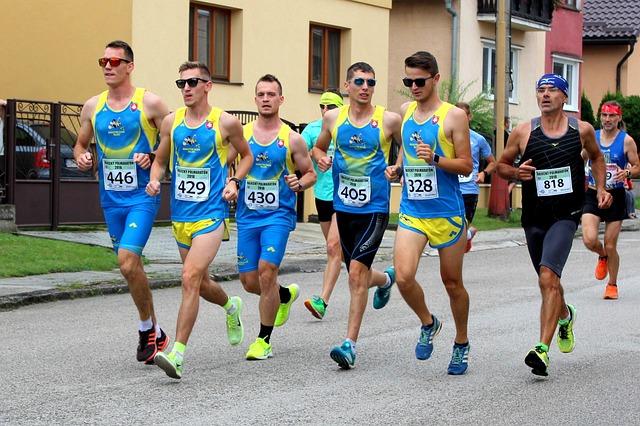
On a cool spring morning in the British capital, athletics history was rewritten on the streets of London. Daniel Ebenyo Sawe shattered the once-impenetrable two-hour barrier at the 2026 TCS London Marathon, delivering a performance that redefines the limits of human endurance and cements the race’s status as a stage for the extraordinary. In a display of precision pacing,tactical control,and sheer resilience,Sawe crossed the finish line in under two hours,transforming a long-discussed possibility into an emphatic reality. His run not only secured victory in one of the world’s premier marathons,but also marked a watershed moment for the sport,raising fresh questions about what is possible over 42.195 kilometres.
Historic breakthrough as Sawe becomes first to run sub two hour marathon in London
In a performance that will be replayed for generations, Eliud Sawe tore up the record books on the streets of the capital, stopping the clock at an astounding 1:59:32. The Kenyan star transformed a cold, clear London morning into a moment of global sporting theater, surging away from an elite field over the final 10 kilometres and turning the iconic Embankment into his personal runway to immortality. Cheered on by dense, roaring crowds stacked three and four deep, Sawe’s metronomic stride and unflinching focus carried him past landmarks like the Cutty Sark and Tower Bridge before he accelerated through Westminster for a finish that felt both inevitable and barely believable.
Race organisers had meticulously engineered conditions for fast times, but it was Sawe’s daring that converted potential into history. Supported by a rotating phalanx of pacemakers and cutting-edge race analytics, he maintained a pace once thought unsustainable over 42.195km,splitting halfway in 59:45 and never once drifting outside world-record trajectory. His achievement instantly reframes the limits of human endurance and elevates the London course to the center of marathon mythology.
- Winning time: 1:59:32
- Location: Central London, UK
- Event: 2026 TCS London Marathon
- Conditions: Cool, dry, light tailwind on key stretches
| Split | Time | Pace / km |
|---|---|---|
| 10km | 28:18 | 2:50 |
| Halfway | 59:45 | 2:50 |
| 30km | 1:25:01 | 2:50 |
| Finish | 1:59:32 | 2:50 |
Tactical mastery and pacing strategies behind Sawe’s record shattering performance
In a performance that felt meticulously scripted yet astonishingly fluid, Sawe transformed the streets of London into a masterclass in racecraft. From the opening kilometre he refused the lure of reckless front-running, instead nesting himself within the pacemaker pod and tracking splits with icy precision. Each 5km segment hovered within seconds of the target, allowing him to conserve energy while rivals burned precious reserves responding to minor surges and wind shifts along the Thames.Sawe’s decision to delay any visible effort until after the halfway mark echoed the discipline of a championship final rather than a record chase,using drafting and micro-adjustments in stride to keep his heart rate and cadence unnervingly steady. The result was a rhythm so controlled that, by Tower Bridge, the chase group looked strained while Sawe appeared merely occupied, not extended.
The decisive moments came as the pacers stepped off and the race shifted from engineering to improvisation.Sawe unleashed a series of controlled accelerations between the 25km and 35km marks, selecting the flat, wind-protected sections to apply pressure and avoiding wasteful moves on exposed straights. His approach could be broken down into a few core principles:
- Negative-split intent – running the second half marginally faster than the first without drastic surges.
- Surge timing – choosing landmarks and aid stations as psychological anchors for short, sharp injections of pace.
- Pack psychology – sitting just off the shoulder of leaders before gliding past decisively, never inviting a side-by-side duel.
- Risk management – accepting brief slowdowns on corners and congested patches rather than forcing the line.
| Segment | Key Tactic | Impact |
|---|---|---|
| 0-10km | Hide in pacemaker shield | Energy savings, zero panic |
| 10-25km | Metronomic splits | Physiological stability |
| 25-35km | Targeted mini-surges | Gradual field attrition |
| 35-Finish | Controlled risk, full commit | Clear road to sub-two |
Impact of Sawe’s achievement on elite distance running technology and training
In the slipstream of Sawe’s historic run, the frontier of distance running is already shifting. His performance, executed within a tightly controlled yet open-race surroundings, is becoming a new blueprint for how elite athletes prepare and race.Coaches and sports scientists are dissecting every split, every micro-adjustment in cadence, and every nutrition cue to refine the next generation of marathon programmes. Early adopters are integrating race-day simulations that mirror Sawe’s risk-balanced pacing, and also microcycle blocks tuned to high-speed, high-efficiency running. Training groups are also recalibrating what they consider “marathon pace”, with athletes now regularly rehearsing segments at or below the once-mythical two-hour threshold.
- Hyper-personalised data from wearables to tailor biomechanics and stride.
- Real-time lactate and glycogen tracking informing mid-session pace changes.
- Aerodynamic formations in group runs to mimic race-day drafting.
- Shoe and insole prototyping based on Sawe-inspired force-plate metrics.
| Focus Area | Pre-Sawe | Post-Sawe |
|---|---|---|
| Pacing Strategy | Negative split ambition | Precision metronomic pacing |
| Footwear | Carbon plate as advantage | Full-stack systems (foam, plate, geometry) |
| Training Load | High mileage focus | High-intensity efficiency blocks |
| Data Usage | Post-session analysis | Live feedback loops |
At the technological edge, Sawe’s run is accelerating collaboration between shoe manufacturers, performance labs and race organisers. The London streets became a proving ground for AI-informed pacing algorithms, clever race vehicles providing split data with near-zero lag, and next-wave super shoes tuned to reduce muscular damage over extreme speed. Elite training hubs are responding by building “Sawe sessions” into their weekly schedules, where athletes combine advanced treadmills, altitude simulation and biomechanical feedback to rehearse sub-two-hour intensity. The result is a rapidly evolving ecosystem where performance is no longer about any single innovation, but an integrated matrix of tech, training and race design calibrated to chase a barrier that, thanks to Sawe, no longer exists.
How London Marathon organisers can leverage Sawe’s feat to grow global participation and engagement
London Marathon Events now holds the most powerful story in distance running: a human being, Sawe, breaking the two-hour mark on the streets of the capital. To translate that into sustained global momentum, organisers can weave his performance into an always-on storytelling engine that connects fans, broadcasters and runners of every level. A multi-layered digital strategy could include behind-the-scenes mini-documentaries, interactive race data visualisations and geo-targeted social campaigns in key running markets. Paired with dynamic language localisation and region-specific influencer partnerships, Sawe’s run becomes not just a British achievement but a shared global moment that aspiring runners from Nairobi to New York can tap into. The aim: reposition the event as the marathon where history is most likely to be made.
On the participation side, London Marathon Events can turn Sawe’s benchmark into a set of accessible, tiered challenges that invite runners of all abilities to chase their own “sub-two” goals. By building flexible entry products, time-banded training programmes and community-led initiatives around his achievement, they can lower psychological and logistical barriers to entry worldwide.
- Global “Chase Your Two” campaign – invite runners to break their own two-hour barrier (10K, half marathon, or cumulative monthly mileage).
- Sawe-inspired virtual race series – app-tracked events with live leaderboards and interactive maps of the London course.
- Elite-to-amateur training content – bite-sized videos, pace calculators and downloadable plans anchored in Sawe’s splits.
- International charity alliances – link global causes to exclusive “Sawe waves” and guaranteed entries for fundraising milestones.
| Initiative | Audience | Engagement Hook |
|---|---|---|
| Sawe Live Data Hub | Fans & media | Interactive pace, splits, heat maps |
| Global Sub-Two Challenges | Everyday runners | Personalised digital medals & badges |
| International Campus Series | Students & first-timers | Hybrid races streamed from London |
| Sawe Legacy Scholarships | Emerging elites | Coaching, travel grants, London starts |
Insights and Conclusions
As the crowds slowly filtered away from The Mall and the course barriers came down, the significance of Sawe’s run lingered in the cool London air. This was more than a race won; it was a redefining of what is possible over 26.2 miles, achieved on one of the sport’s most iconic stages.
In the years ahead, the 2026 TCS London Marathon will be remembered not just for a time on the clock, but for the moment distance running crossed a psychological frontier in open competition. Sawe’s sub-two-hour marathon has redrawn the limits of endurance sport, ensuring that, from now on, every elite start line will carry a new question: if he could do it in London, what else might be within reach?
For London Marathon Events, and for the millions who watched around the world, this was a landmark chapter in the race’s history-an afternoon when the streets of the capital became the proving ground for a performance that will shape the future of marathon running.