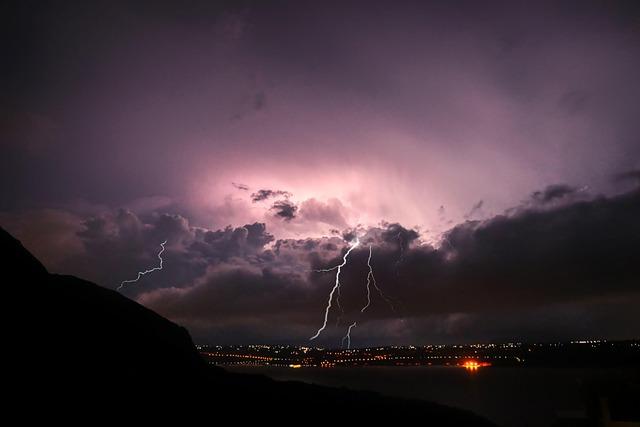
The Met Office has issued a fresh weather warning as thunderstorms threaten to disrupt large parts of the UK, raising the risk of flash flooding, travel delays, and power cuts.Businesses and households are being urged to prepare for potentially severe conditions, with forecasters warning that intense downpours, frequent lightning, and strong gusts could hit at short notice. As London and the wider South East brace for unsettled weather, concerns are mounting over the impact on transport networks, supply chains, and day-to-day operations across the capital.
Met Office issues thunderstorm alerts across London and the South East
The national forecaster has placed much of the capital and surrounding counties under a yellow warning, citing a volatile mix of intense downpours, frequent lightning and gusty winds moving in from the west this afternoon. Weather models suggest that slow-moving cells could dump large amounts of rain over a short period, raising the risk of flash flooding on key commuter routes, including major rail lines and trunk roads leading into central London. Commuters, retailers and hospitality operators are being urged to factor in longer travel times, with surface water, temporary signal failures and reduced visibility all likely to disrupt the evening rush.
Business continuity planners are paying particular attention to the danger of short-lived power interruptions triggered by lightning strikes and overloaded drainage systems around substations. Small firms without robust backup systems remain especially exposed, prompting local chambers of commerce to circulate practical guidance on safeguarding stock, equipment and data. Key recommendations include:
- Review: Check surge protection and UPS units for critical IT and payment systems.
- Back up: Securely copy essential files before the worst of the weather arrives.
- Plan staff travel: Allow flexible start and finish times around peak storm periods.
- Protect premises: Clear drains and gutters to reduce localised flooding at entrances.
| Area | Risk Level | Key Concern |
|---|---|---|
| Central London | High | Transport delays |
| Outer Boroughs | Moderate | Localised flooding |
| Home Counties | Variable | Power fluctuations |
Infrastructure at risk how lightning and flooding could disrupt power and transport
London’s dense web of cables, rails and tunnels is particularly exposed when skies turn volatile. Intense lightning strikes can instantly knock out local substations, damage transformers and trigger automatic shutdowns across the grid. This doesn’t just mean lights flickering, but the potential for extended power outages that affect homes, data centres and critical services. As backup generators kick in, businesses are urged to review their continuity plans, ensuring that key operations, from trading floors to refrigerated storage, can withstand several hours without mains electricity. Meanwhile, rail operators face signal failures and damaged overhead lines, with knock-on delays rippling far beyond the capital.
At street level, torrential rain arriving in short, violent bursts can overwhelm Victorian-era drainage in minutes, sending water pouring into underpasses, station entrances and low-lying depots. That raises the odds of road closures, diversions and stranded commuters as buses and delivery vehicles are forced onto already congested routes. To help businesses and residents understand the pinch points, the most vulnerable assets tend to be:
- Substations located near rivers, canals or surface water hotspots
- Underground stations with limited drainage and narrow access
- Key junctions on ring roads and major arterial routes
- Business parks built on reclaimed or low-lying land
| Risk Area | Main Threat | Likely Impact |
|---|---|---|
| Power grid | Lightning strikes | Local blackouts |
| Rail network | Line flooding | Service suspensions |
| Roads | Surface water | Closures & congestion |
| Digital hubs | Power dips | Data interruptions |
Business continuity strategies for London firms facing weather linked power cuts
With the Met Office signalling potential disruption to the capital’s power network, London firms are reassessing how resilient their operations really are. At the top of the list is safeguarding critical data and communications: migrating files to cloud-based collaboration suites, enabling VPN access for key staff, and introducing multi-channel communication plans (email, SMS and collaboration apps) to reach employees and clients even when office systems go dark. Businesses are also turning to uninterruptible power supplies (UPS) and battery-backed routers to keep essential devices online long enough to complete transactions, safely shut down systems or switch to remote working. For customer-facing firms,clear,pre-written messaging about service disruptions and estimated recovery times helps preserve trust when the lights go out unexpectedly.
Resilient London companies are now treating weather-related outages as a core operational risk rather than a rare inconvenience. Practical steps include:
- Mapping critical processes – identifying which services must remain live and which can pause.
- Formal remote-work playbooks – pre-approved procedures for switching staff to home or satellite sites.
- Supplier diversification – alternative logistics, payment and telecoms providers on standby.
- Scenario drills – short power-out simulations to test decision-making and recovery speed.
| Risk Area | Low-Cost Action | Owner |
|---|---|---|
| IT systems | Enable cloud backups and UPS for servers | IT lead |
| Staff access | Issue secure remote logins and contact trees | HR / Ops |
| Client comms | Prepare outage email and website notices | Marketing |
| Premises | Check emergency lighting and manual entry | Facilities |
Protecting homes and communities practical steps to prepare for severe storms
As warnings escalate, homeowners and business leaders across the capital are being urged to treat resilience as seriously as any other investment. Simple measures can sharply reduce damage from flash flooding, lightning and sudden power loss: reinforce loose roof tiles and garden structures, clear gutters and drains to stop water backing up, and secure or store outdoor furniture that could become airborne in high winds. Prepare a basic emergency kit with torches, battery packs, bottled water, non‑perishable food and essential medicines, and print out key phone numbers in case mobile networks or cloud contacts become temporarily inaccessible.
- Back up critical work files and household documents to both the cloud and an external drive.
- Charge all devices and power banks ahead of the storm window.
- Protect electronics with surge protectors or unplug during peak lightning activity.
- Check neighbours who are elderly, disabled or live alone, and agree a contact plan.
- Review insurance cover for flooding, roof damage and business interruption.
| Risk | Fast Action |
|---|---|
| Flash flooding | Move valuables upstairs; lift cables and rugs |
| Power cuts | Prepare off‑grid lighting and a radio |
| Flying debris | Secure bins, signage and loose fixtures |
| Travel disruption | Work from home where possible; avoid non‑essential trips |
Closing Remarks
As the capital braces for unsettled skies, businesses and residents alike are being urged to stay alert, plan ahead and heed official advice. While the coming storms may prove short-lived, their impact-particularly in terms of travel disruption and power reliability-could be felt across key sectors of London’s economy.
With the Met Office continuing to monitor conditions closely, further updates and warnings remain possible. For now, the message from forecasters and industry experts is clear: prepare for localised disruption, safeguard critical operations where you can, and stay informed as the weather picture develops over the days ahead.