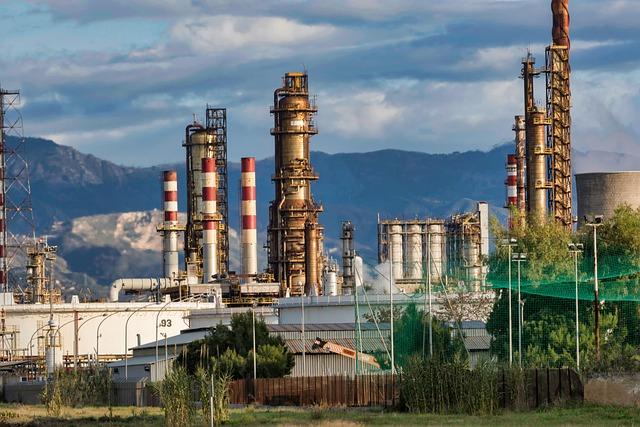
Oil prices steadied on Monday after recent swings, as traders weighed signs of physical tightness in crude supplies against a backdrop of persistent geopolitical uncertainty. While benchmark futures inched only marginally higher, underlying market dynamics suggest risks remain skewed to the upside.Disruptions in key producing regions, resilient demand, and cautious output strategies from major exporters are keeping real barrels in short supply, even as financial markets debate the global growth outlook. For businesses and investors in London and beyond, the apparent calm in headline prices may mask a more fragile and finely balanced oil market, with any escalation in geopolitical flashpoints or supply constraints capable of triggering renewed volatility.
Market reactions to marginal oil price stabilisation and lingering volatility risks
Traders are treating the latest price plateau less as a turning point and more as a cautious pause, with bid-ask spreads narrowing yet remaining wider than pre-crisis norms. Equity markets have responded with selective rotation rather than broad relief rallies: integrated majors are seeing modest support, while highly leveraged shale producers remain under scrutiny as investors test the durability of their cash flows at these mid-range prices. In the derivatives space, options volatility has eased from recent peaks but still prices in meaningful tail-risk, underscoring lingering fears that any disruption in key producing regions could swiftly unwind the calm.
The mood across asset classes is therefore one of guarded repositioning rather than outright optimism, reflected in:
- Energy equities: Preference for balance-sheet strength over pure-play growth stories.
- Credit markets: Stable spreads for investment-grade oil names,tighter scrutiny on high-yield issuers.
- Currencies: Subtle support for petro-currencies, but with limited conviction amid central bank uncertainty.
- Hedging flows: Corporates extending coverage tenors, prioritising downside protection over upside participation.
| Asset | Recent Move | Market Interpretation |
|---|---|---|
| Brent Futures | Range-bound,low teens vol | Stability,but no conviction on trend |
| Oil Majors’ Stocks | Slight outperformance vs. indices | Defensive haven within cyclicals |
| High-Yield Energy Bonds | Spreads sticky at elevated levels | Credit buyers still pricing shock risk |
How physical supply tightness is reshaping refinery margins and inventory strategies
With seaborne barrels harder to secure and key export hubs constrained, refiners are being forced to rethink how they capture margins across the barrel. Crack spreads on middle distillates have widened relative to gasoline, rewarding plants that can flex yields towards diesel and jet fuel. This shift is prompting a quiet re‑ranking of assets: complex, conversion-heavy refineries are outperforming simpler hydroskimming units, while operators with access to advantaged crude slates are squeezing out competitors reliant on spot cargoes. In practice, the strongest performers share a few traits:
- Feedstock flexibility to switch quickly between sour and sweet grades
- High distillate yield to capture elevated margins on diesel and jet
- Integrated logistics that reduce exposure to freight and congestion risks
- Digital optimisation tools that recalibrate run plans in near real time
This same tightness is rewriting playbooks for stock management. Rather of treating tanks as passive storage, refiners and traders now use inventories as a tactical asset, timing crude arrivals and product releases to arbitrage price dislocations between regions and delivery windows. Safety stocks are creeping higher, but so is selectivity: operators are prioritising on‑hand volumes of the most profitable cuts and grades while trimming exposure to slower-moving products. The new calculus can be seen in how many days of cover refiners are willing to hold:
| Product | Typical Days of Cover (2021) | Current Target Range |
|---|---|---|
| Diesel / Gasoil | 18-20 | 22-26 |
| Jet Fuel | 10-12 | 14-18 |
| Gasoline | 20-22 | 18-20 |
Geopolitical flashpoints from the Middle East to Eastern Europe weigh on energy security
From shipping lanes in the Red Sea to pipeline networks crossing Ukraine, political friction is increasingly being priced into every barrel. Traders now track ceasefire talks, sanctions announcements and naval movements with the same intensity as inventory data, aware that a single escalation could choke key supply routes or trigger new export bans. The result is a risk premium that ebbs and flows with headlines, amplifying price swings even when underlying demand indicators remain relatively stable. In this environment, refiners, airlines and industrial buyers are being forced to rethink hedging strategies, building in wider buffers to cope with sudden dislocations.
Energy policymakers, simultaneously occurring, face a narrowing margin for error as conventional suppliers become more exposed to regional tensions and domestic unrest. European capitals, still recalibrating after the loss of Russian pipeline gas, are racing to diversify crude and LNG imports, while Gulf producers juggle investment in spare capacity with domestic fiscal pressures. Key pressure points include:
- Disrupted transit routes – attacks on tankers and infrastructure heighten insurance costs and re‑routing risks.
- Sanctions and counter‑sanctions – shifting compliance rules complicate long‑term supply contracts.
- Strategic stockpile moves – coordinated releases or rebuilds can accentuate market volatility.
- OPEC+ cohesion – any policy rifts within the group could trigger abrupt supply shifts.
| Region | Key Risk | Market Impact |
|---|---|---|
| Middle East | Strait of Hormuz tensions | Premium on seaborne crude |
| Eastern Europe | Pipeline disruptions | Higher European import costs |
| Black Sea | Port security issues | Freight delays and rerouting |
Actionable strategies for traders and corporate hedgers navigating a fragile oil landscape
With benchmark prices oscillating in a narrow band yet underpinned by supply fears, traders are leaning on shorter planning cycles and a more granular read of physical flows. Many desks are pairing intraday mean‑reversion trades with event‑driven breakout setups around OPEC meetings, inventory releases and shipping disruptions, while using options structures to define risk in a headline‑sensitive tape. Desk managers are also tightening collateral and margin triggers, stress‑testing portfolios against shocks such as an abrupt Strait of Hormuz disruption or an unplanned Libyan outage. In parallel, more weight is being given to cross‑asset signals-credit spreads of key producers, tanker day rates and refinery margins-to validate or challenge directional views on front‑month futures.
- Corporate hedgers are staggering hedge entries, replacing one‑off annual fixes with layered monthly or quarterly programmes.
- Producers are blending swaps with collars to lock in cash flow while retaining upside participation if supply tightness accelerates.
- Consumers are tying hedge volumes to demand indicators-such as order books and utilisation rates-to avoid over‑hedging in a slowdown.
- Treasury and risk teams are formalising trigger levels that automatically increase or pause hedging when volatility and spreads hit predefined thresholds.
| Actor | Key Tool | Primary Objective |
|---|---|---|
| Trading desks | Short‑dated options | Exploit event‑driven swings |
| Refiners & airlines | Layered hedging | Smooth input costs |
| Producers | Collars & swaps | Secure minimum revenue |
| CFOs & risk officers | Scenario stress tests | Protect balance sheet |
In Conclusion
In the coming weeks, traders and policymakers alike will be watching whether supply constraints ease or deepen, and how geopolitical tensions evolve across key producing regions. For now, the modest stabilisation in prices masks an underlying fragility in the market: inventories remain tight, spare capacity is limited, and the geopolitical backdrop is anything but settled.
Against this complex and fluid landscape, the risk of renewed volatility is highly likely to persist. While consumers may welcome any respite at the pump, the balance of risks in the oil market still tilts to the upside-leaving businesses, governments and investors little choice but to remain vigilant.