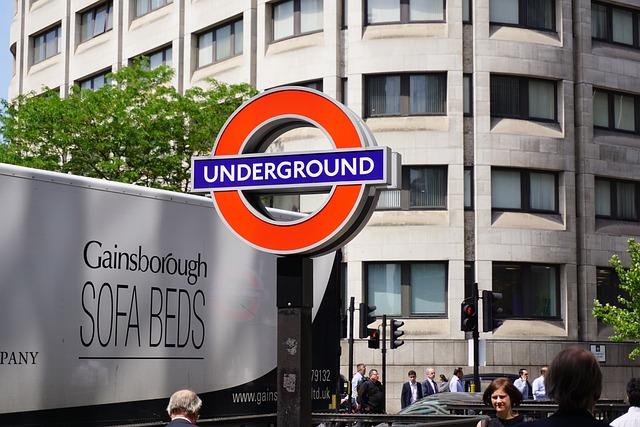
London Underground passengers are facing major disruption next week after Tube drivers confirmed plans for a fresh wave of strike action. Members of the ASLEF union are set to walk out on key days in a long-running dispute over pay and changes to working conditions, prompting fears of severe delays, reduced services and station closures across the capital’s transport network. Transport for London (TfL) has warned commuters, businesses and visitors to prepare for notable travel disruption, as both sides blame each other for the breakdown in talks. The declaration of confirmed strike dates comes at a critical time for the network, raising fresh questions about industrial relations on one of the world’s busiest metro systems.
Impact of upcoming London Underground driver strikes on commuters and city transport
The latest industrial action will reverberate far beyond ticket barriers, reshaping how millions move across the capital.With core Tube lines running a dramatically reduced service, commuters are expected to pivot towards already stretched alternatives – from Overground and bus routes to walking, cycling and app-based ride-hailing. Peak-hour congestion is highly likely to intensify around key interchanges such as London Bridge, Waterloo and Liverpool Street, as workers attempt last-minute route changes. Employers are being urged to extend remote-working options, stagger start times and relax lateness policies as journey times stretch and reliability drops.
- Heavier demand on buses, Overground and DLR services
- Longer queues at taxi ranks and ride-hailing hotspots
- Spillover congestion on major roads and river crossings
- Knock-on delays for airport-bound travellers
| Area | Expected Impact |
|---|---|
| Central London | Severe crowding, slower bus journeys |
| Suburban Zones | Increased car use, pressure on park-and-ride |
| Business Districts | Higher WFH rates, staggered office hours |
Beyond the daily commute, the disruption threatens to ripple through hospitality, retail and the night-time economy, with theatres, restaurants and venues braced for cancellations and reduced footfall. Tourists may face confusing last-minute changes, while low-paid shift workers – often with the fewest flexible options – risk lost hours and income. City Hall and Transport for London are under pressure to communicate clearly and early, providing real-time updates and encouraging use of choice modes such as Santander Cycles and walking routes.How effectively the network and its users adapt will help determine whether the city weathers the stoppages with temporary inconvenience or slides into a week of gridlock.
Key reasons behind the industrial action and unresolved disputes with Transport for London
At the heart of the walkout is mounting anger over changes to working conditions,pensions and staffing levels that unions argue were introduced without meaningful consultation. Drivers say they are facing a creeping erosion of rest breaks, an increase in weekend and night duties, and the threat of more intense rostering as Transport for London (TfL) looks to plug budget gaps. Safety is also a flashpoint: representatives claim that staff cuts at stations and on control teams are piling pressure onto drivers, raising the risk of fatigue-related incidents. These concerns are sharpened by fears that long‑standing pension protections, viewed by workers as deferred pay, could be diluted as part of cost‑saving reviews commissioned after the pandemic.
Negotiations with TfL have repeatedly stalled, with both sides trading accusations over who walked away from the table first.Union leaders insist that managers have failed to provide concrete, written guarantees, instead offering what they describe as “vague assurances” on future job security and no‑compulsory‑redundancy pledges. Among the sticking points are:
- Rosters and work‑life balance – drivers say proposed timetables make family life “unmanageable”.
- Pension reform – uncertainty over contributions and retirement age is fuelling distrust.
- Safety standards – fears that leaner staffing and tighter turnarounds will undermine safe running.
- Pay progression – concerns that new entrants could be hired on worse terms, creating a two‑tier workforce.
| Issue | Union Position | TfL Response |
|---|---|---|
| Pensions | Guarantee current scheme | Review “still ongoing” |
| Rosters | Protect existing patterns | “Modernisation” needed |
| Staffing | No further cuts | Efficiency drives to continue |
How passengers can plan alternative routes and minimise disruption during the strike days
With industrial action set to hit key lines, regular commuters are being urged to treat their journeys more like long-haul logistics than a casual hop across town. That means checking live updates on TfL’s website and apps before leaving home, building in generous buffers for delays, and being ready to switch modes at short notice. Rail-replacement buses, London Overground, DLR, and Elizabeth line trains are expected to carry heavier loads, so leaving earlier and avoiding peak times can make the difference between getting to work and turning back at a packed platform. Travellers should also explore cross-town journeys on National Rail services, even where those routes might usually seem indirect.
- Use journey planners (TfL, Citymapper, Google Maps) to test several routes.
- Walk or cycle shorter distances to bypass bottleneck stations.
- Plan flexible working hours or remote days where possible.
- Pre-book bikes or e-scooters in areas with limited bus capacity.
- Share travel plans with employers or clients in advance.
| From | Usual Tube | Strike-Day Alternative |
|---|---|---|
| Brixton – Oxford Circus | Victoria line | Bus 159 + walk from Tottenham Court Road |
| Stratford – Liverpool Street | Central line | Elizabeth line or Greater Anglia services |
| Canary Wharf – Bank | Jubilee & Northern | DLR to Tower Gateway + short walk |
| Shepherd’s Bush – Warren Street | Central & Victoria | Overground to Euston + walk |
Long term implications for staffing negotiations funding and reliability on the Tube network
The latest industrial action risks hard‑baking new assumptions into how the capital’s transport workforce, managers and City Hall bargain with one another. Unions, facing a cost‑of‑living squeeze and concerns over automation, are likely to push harder for multi‑year guarantees on pay, pensions and job security, while Transport for London seeks greater flexibility over rosters, redeployments and use of technology. This tension will shape future driver contracts,training pipelines and the balance between full‑time and part‑time roles. If mistrust deepens, talks could become slower and more legalistic, with side‑effects such as longer lead times for timetable changes and a greater reliance on temporary staff.
Funding arrangements are equally exposed. Repeated disruption undermines passenger confidence, threatens fare income and complicates already fragile negotiations with the Treasury. Policymakers may start exploring:
- Ring‑fenced contingency funds to cushion revenue shocks from walkouts
- Performance‑linked grants tied to service reliability benchmarks
- Incentives for off‑peak travel to stabilise income patterns
| Scenario | Staffing impact | Reliability outcome |
|---|---|---|
| Stable long‑term deal | Predictable recruitment and retention | Fewer ad‑hoc cancellations |
| Ongoing dispute cycle | Higher turnover, harder planning | Frequent timetable disruption |
| Automation accelerated | Reskilling and role redesign | Potentially smoother but politically contested service |
How these strands are resolved will determine whether the Tube emerges as a more resilient, data‑driven network or drifts into a pattern of periodic stand‑offs that erode its status as London’s default mode of urban transport.
To Wrap It Up
As the capital braces for another round of disruption, attention will now turn to whether last-ditch talks can avert the planned walkouts. However, with both sides apparently entrenched over pay, conditions and proposed changes to working practices, commuters are being urged to plan for significant upheaval across the network.
Transport for London insists it is doing all it can to keep services running and minimise the impact, but warns that some lines may be shut altogether and others will operate severely reduced timetables. Unions, simultaneously occurring, maintain that industrial action is a last resort in the face of what they describe as an erosion of terms and conditions.
With the first strike date now days away, the coming week will test not just the resilience of London’s transport system, but also the willingness of union leaders and transport bosses to compromise.For millions of Londoners, the outcome will determine whether next week brings a routine commute – or a return to the familiar chaos of a city brought to a standstill.