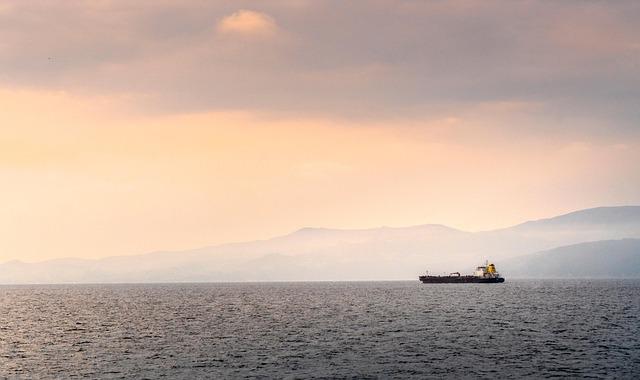
NATO is considering a renewed military role in the Gulf as tensions in the Strait of Hormuz threaten to disrupt global energy supplies and destabilise an already volatile region. With a series of maritime incidents, drone attacks and escalating rhetoric between Iran and Western powers, alliance officials are weighing options for a potential deployment aimed at protecting vital shipping lanes and reassuring nervous markets. The debate comes as European governments, including the UK, seek a coordinated response that balances deterrence with diplomacy-amid fears that any misstep could draw NATO into a wider regional confrontation.
NATO deliberations over Gulf mission focus on deterring escalation and securing global trade routes
Behind closed doors in Brussels, ambassadors are weighing how far the alliance should go in a waterway that carries roughly a fifth of the world’s seaborne oil. Draft briefing papers circulating among member states, according to officials, highlight twin priorities: preventing a miscalculation that could drag Western navies into direct confrontation with regional powers, and protecting the commercial lifelines that keep European factories running. Early concepts under discussion include a narrowly defined maritime security mission,strict rules of engagement,and a clear legal mandate anchored in international law to avoid accusations of mission creep.
Diplomats say the emerging blueprint centres on “pragmatic deterrence” rather than power projection, with several capitals pushing for a lean footprint that reassures markets without inflaming tensions. Working documents outline potential measures such as:
- Coordinated naval patrols along key shipping corridors
- Shared surveillance data from drones, satellites and coastal radars
- Escorted convoys for the most vulnerable merchant vessels
- Joint incident hotlines to de‑conflict with regional navies
| Chokepoint | Main Risk | Priority for NATO |
|---|---|---|
| Strait of Hormuz | Seizure of tankers | High |
| Bab el‑Mandeb | Drone & missile strikes | Medium |
| Suez approaches | Disruption to container traffic | Rising |
Regional power dynamics in the Strait of Hormuz reshape alliances and risk calculations for European capitals
From Lisbon to Warsaw, national security councils are recalibrating their assumptions about energy security and maritime risk as Gulf rivalries bleed into shipping lanes once treated as routine. European officials now privately concede that the old model-outsourcing hard security in the Gulf to the US Fifth Fleet-can no longer be taken for granted, especially as regional actors such as Iran, Saudi Arabia, the UAE and Qatar deploy a mix of gray-zone tactics, cyber tools and proxy forces to assert leverage. This has triggered intense internal debates over how far Europe is willing to go in protecting tankers flying European flags, and whether a visible NATO naval footprint could deter further escalation or merely draw the alliance deeper into a volatile stand-off.
These shifting realities are filtering into alliance politics in tangible ways, from coordinated sanctions packages to joint naval drills with Gulf partners and quiet back‑channel talks in Muscat and Doha. European diplomats describe a new “risk tiering” of Gulf partners, with some capitals leaning into defense-industrial cooperation and others hedging to preserve mediation roles. The following snapshot, shared by a senior EU security official, captures how several key states are reassessing their strategic exposure and options:
| Capital | Primary Concern | Preferred Response |
|---|---|---|
| London | Protection of shipping & insurers | Robust NATO naval role |
| Paris | Strategic autonomy & arms exports | EU-led mission with French flagship |
| Berlin | Energy import vulnerability | Cautious support, legal safeguards |
| Rome | Trade routes & migration spillover | Limited deployments, burden-sharing |
- Energy security is now treated as a frontline defence issue, not merely an economic concern.
- Alliance cohesion is being tested by differing appetites for risk and rules of engagement.
- Back-channel diplomacy has become as crucial as frigates and fighter jets in managing escalation.
Energy security and market volatility drive UK business anxiety amid rising maritime tensions
For corporate Britain, the Strait of Hormuz is no distant flashpoint but a fragile lifeline. With a significant share of UK-bound crude and LNG cargoes transiting the contested waterway, every incident at sea now reverberates through trading floors in London and manufacturing hubs from the Midlands to the North East. Treasury teams are scrambling to reassess exposure as spot prices swing on headlines, while energy-intensive sectors quietly model worst‑case scenarios that include shipping delays, insurance surcharges and abrupt shifts in hedging costs. Boardrooms that once treated maritime security as a defence issue are now treating it as a core business risk, prompting closer scrutiny of supply contracts, charter-party clauses and contingency routing via alternative chokepoints.
This recalibration is reshaping strategy in real time. UK businesses are weighing how to balance cost discipline with resilience, turning to diversified sourcing, expanded stockpiles and closer cooperation with insurers and logistics providers.Many are building internal “war room” dashboards that track:
- Day-rate movements for tankers and bulk carriers
- Energy price spreads between Gulf-origin and alternative suppliers
- Marine war-risk premiums and changing underwriter appetites
- Port congestion indicators along substitute routes
| Factor | Business Impact (UK) |
|---|---|
| War-risk insurance hikes | Higher delivered fuel and freight costs |
| Route diversions | Longer lead times, tighter inventories |
| Price volatility | Pressure on margins and cash-flow forecasts |
| Naval posture shifts | Sudden repricing of geopolitical risk |
Policy options for NATO and the UK from naval rules of engagement to economic backstops for affected industries
For NATO planners and UK ministers, the immediate focus is on tightening naval rules of engagement without sleepwalking into escalation. London is quietly pushing allies to agree on clearer thresholds for ship escorts, electronic jamming and non-lethal disabling measures that can be deployed within minutes, not hours. Behind closed doors, officials discuss a graduated response ladder that ranges from enhanced surveillance to joint patrols and, in extremis, limited kinetic action strictly confined to self-defence. Diplomatic cables suggest fresh attention on coordination between NATO maritime assets and Gulf partners, and also on mechanisms to rapidly verify and share intelligence to avoid miscalculation in a congested strait. The UK, conscious of its post-Brexit identity, is also exploring a more visible Royal Navy leadership role, balanced by firm legal advice on compliance with international maritime law.
- Targeted tax relief for shipping and energy firms absorbing higher insurance and rerouting costs.
- Government-backed credit lines for small and mid-cap exporters hit by freight surcharges.
- Fast-track compensation schemes for delayed deliveries on strategic imports, from medical supplies to critical components.
- Strategic fuel reserves deployment to cushion price spikes for households and industry.
| Policy Lever | Primary Goal | Timeframe |
|---|---|---|
| Revised ROE at sea | Deterrence & de-escalation | Immediate |
| Insurance backstops | Keep trade routes viable | Short term |
| Sector support funds | Protect jobs & cashflow | Short-medium term |
| Energy diversification | Reduce Gulf exposure | Structural |
Future Outlook
As NATO deliberates its next move, the stakes in and around the Strait of Hormuz continue to rise. Any decision to deploy alliance assets to the Gulf would mark a significant strategic shift,carrying implications not just for regional security but for global trade,energy supplies and the future of multilateral defence cooperation.
For now, London and its allies remain locked in urgent diplomacy, weighing the costs and benefits of a more visible military footprint against the risks of escalation. What emerges from these talks will offer a telling measure of NATO’s adaptability in an era of fragmented security challenges-and of the UK’s evolving role within that framework.
With shipping lanes under threat and political pressures mounting at home and abroad, the coming weeks are likely to test both the resolve and the unity of Western capitals. How NATO responds to the Hormuz crisis may help define the contours of international security policy for years to come.